
Heat Pump or Solar Hot Water: What Works Best in Adelaide's North-East?

Grove Plumbing & Gas • September 22, 2026

If you're replacing a hot water system in Golden Grove, you'll quickly face a choice between solar and heat pump. Both are low-emission options, which matters because South Australia's rules generally require a new or replacement water heater in a house to be low emission.

Both work well in Adelaide, but they suit different homes. The right choice depends on your roof, your household and how you use hot water. Below we explain how each system works, how Adelaide's north-east climate affects them, and where 5-star gas continuous flow fits in.

1. Our local climate: hot summers, cool nights

Parafield Airport is the nearest Bureau of Meteorology station to Golden Grove, and its long-term records tell a clear story:

  • 23.4 days a year at 35°C or hotter, and 4.7 days at 40°C or hotter
  • A January average maximum of 30.0°C
  • A July average minimum of 6.3°C , with around 1.4 nights a year at or below 0°C
  • Just 444.5 mm of rain a year on average

Plenty of sun suits solar. Cool winter mornings are when heat pumps work hardest. Both systems cope well here, but the climate explains why the details matter.

2. How solar hot water works

Solar hot water systems use collectors on your roof to heat water, which is stored in a tank. On cloudy days or when demand is high, an electric or gas booster tops up the heat.

Solar tends to suit homes that have:

  • A north-facing roof with good sun and little shade
  • A roof that can take the weight of the collectors (and sometimes a roof-mounted tank)
  • Steady daytime hot water use

One safety point: all new and replacement solar hot water installations in South Australia need a temperature control device. Solar can heat water well above safe delivery temperatures on hot days, and heated water to bathrooms must be delivered at no more than 50°C.

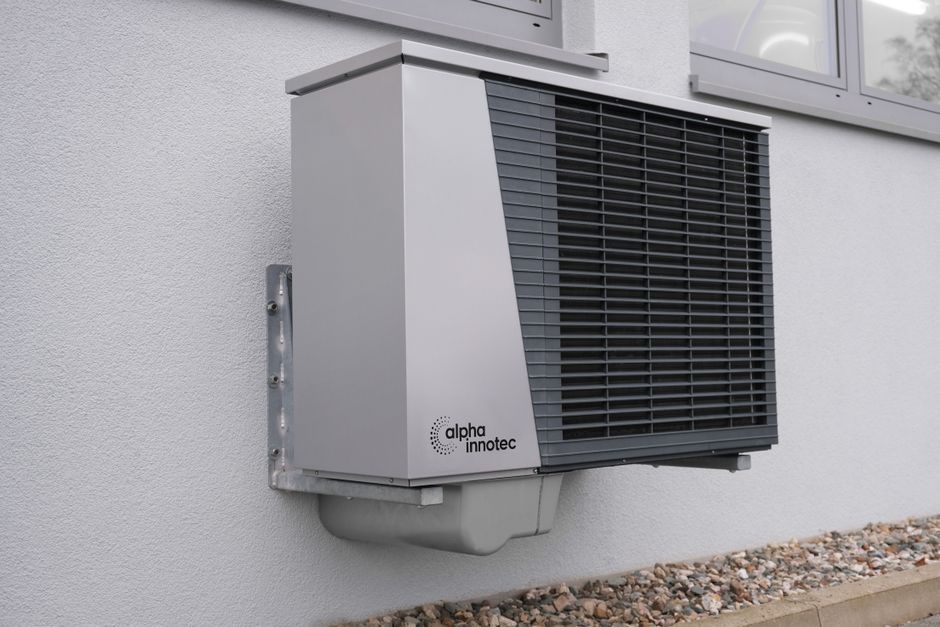
Wall-mounted outdoor HVAC unit on a light gray building exterior, near a window.

3. How heat pump hot water works

A heat pump works like an air conditioner in reverse. It draws heat from the surrounding air and transfers it to the water in the tank. It runs on electricity, but it uses far less than a traditional electric element because it moves heat rather than making it.

Heat pumps tend to suit homes that have:

  • A roof that isn't ideal for solar, because of shading, orientation or limited space
  • Room for the unit outside, away from bedroom windows, since the fan and compressor make some noise
  • Rooftop solar panels, so the heat pump can run on a timer during the day

Heat pumps are most efficient in warm air, so they work hardest on cold winter mornings. Running them during the warmer part of the day, especially on your own solar power, helps performance and running costs.

4. The third option: 5-star gas continuous flow

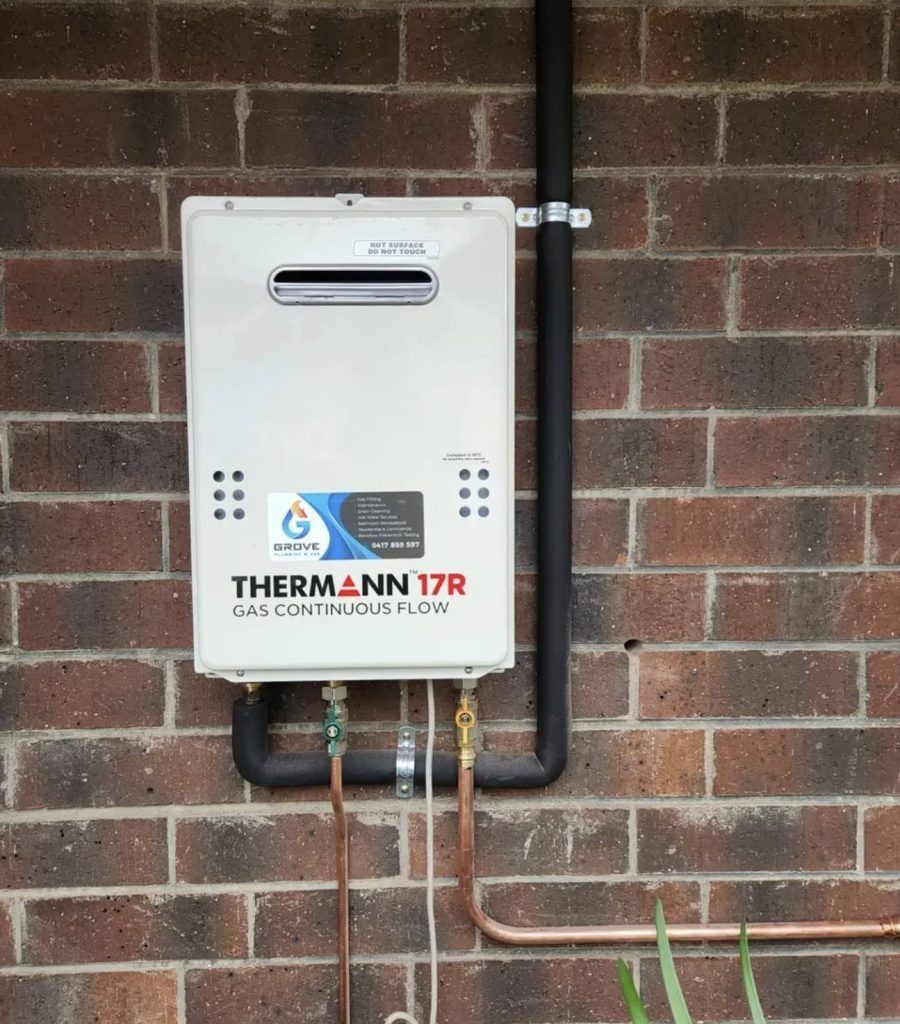
If your home is connected to mains gas, a high-efficiency continuous-flow gas system is also a compliant choice, as long as it has a minimum 5-star energy rating. It heats water only when you turn on a tap, so there's no storage tank and you won't run out of hot water.

It's compact, wall-mounted and suits busy households. Any gas work must be done by a licensed gas fitter. Learn more about our licensed gas fitting.

5. Quick comparison

  • Best for sunny, unshaded roofs: solar
  • Best for shaded roofs or homes with rooftop solar panels: heat pump
  • Best for homes with mains gas and high demand: 5-star gas continuous flow

Which one sounds like your home? If you're still weighing it up, a quick site visit usually settles it. We check your roof, your gas connection, where a unit could go and how your household uses hot water.

Get the right system the first time

Solar and heat pumps both do well in Adelaide's north-east, and 5-star gas is a strong option for homes on mains gas. The best choice comes down to your roof, your energy setup and your household's habits. Whichever you choose, the installation must meet South Australia's temperature rules and come with a plumbing certificate of compliance.

Recent Posts

Hands rinsing a metal pot under a kitchen faucet in a sink
By Grove Plumbing & Gas • September 22, 2026
Golden Grove homes use 253 kL of water a year, the most in Tea Tree Gully. Our local plumbers share 5 practical ways to cut water use and your SA Water bill.
Two workers inspect a red drain-cleaning machine beside a brick wall outdoors
By Grove Plumbing & Gas • September 22, 2026
Tree roots caused 3,275 SA sewer blockages in 2024–25, up nearly 40%. Learn the warning signs and how Golden Grove homeowners can protect their drains.
Hands turning on a silver shower hose over a white bathtub with tiled wall.
By Grove Plumbing & Gas • September 22, 2026
Replacing a hot water system in Golden Grove? SA rules generally require a low-emission unit. Here's what's allowed, what's exempt and how to plan ahead.
Modern kitchen sink with running faucet and glass bottle of flowers beside it
By Grove Plumbing & Gas • September 22, 2026
Golden Grove's tap water averages 93 mg/L hardness, per SA Water's latest report. Here's what that means for your hot water system, kettle and tapware.
White Thermann 17R wall-mounted gas water heater on a brick exterior wall with exposed pipes
By Grove Plumbing & Gas • September 22, 2026
Learn the 5 warning signs your hot water system is failing, from inconsistent temperatures to rust, and what to do, from Grove Plumbing & Gas in Golden Grove.
Pipe inspection camera with monitor and coiled cable on a cart in a workshop, with a wet floor.
By Grove Plumbing & Gas • September 22, 2026
Discover the 7 most common causes of blocked drains, from hair and grease to tree roots, and how to prevent them, from Golden Grove's Master Plumber.